
Fewer animals are being adopted from San Francisco Animal Care & Control (SFACC) since the start of the COVID-19 pandemic. In 2021 and 2022, 1,354 and 1,248 found a home, compared to 1,761 in 2019. The number of animals brought to SFACC has also declined, to 4,391 in 2021, 5,257 in 2022, compared with 5,608 in 2019.
SFACC takes in animals as strays, owner-surrenders, and through assumption of custody. Custody is triggered by a variety of situations, including the owner dying or the creature being termed a threat to public safety. Most animals coming into SFACC do so as strays, predominately cats. SFACC also receives birds, reptiles, amphibians, fish, rabbits, and small mammals, such as guinea pigs.
Adoption rates may be muffled by increasing costs for food, veterinarian care, and grooming, in part due to a shortage of vets. In 2021, the national annual average cost of housing a dog was $1,391, according to the American Society for the Prevention of Cruelty to Animals (ASPCA). It’s safe to assume that costs in San Francisco are considerably higher.
“The good news is it’s now easier to foster or adopt,” said Ariana Luchsinger, SFACC operations manager. “We have put much of the training and application process online. SFACC has four foster programs, the kitten foster program, which involves care from birth to eight weeks, the puppy foster program, also from birth to eight weeks, the small mammal foster program, and Caregivers Helping Animals Make Progress, for animals that could benefit from behavior changes and training.”
San Francisco renters who want to foster or adopt an animal may face restrictions on the presence, number, and type of pets allowed. Under the U.S. Fair Housing and California Fair Employment and Housing acts, individuals who require an emotional support animal (ESA) can forgo no- or restricted-pet lease terms, if they have a letter from a licensed health professional that states that the tenant needs the ESA due to a disability. In these circumstances the property owner cannot charge an additional fee or security deposit, nor require insurance for the ESA.
SFACC needs foster homes for cats during kitten season, which typically runs from April until September, when the weather is mild.
“We usually take in between 800 and 1,000 kittens per season, which begins as soon as the weather warms up. There’s no season for puppies. If you’re interested in fostering kittens, we could use you up to 10 times in several months,” said Luchsinger.
According to Anne Moellering, SF SPCA chief of rescue and welfare, SF SPCA’s adoption trends echo SFACC’s.
“The total number of adoptions in 2019 was 4,141. Our count went to 3,235 in 2021 and 3,237 in 2022. During 2020, we had to shut down temporarily. There was a lot of uncertainty about COVID. We’re aiming for 4,400 adoptions in 2023,” said Moellering.
SFACC had more surrenders of large dog breeds, including huskies and German Shepherds, during the pandemic. According to Moellering, there’s a perception that big dogs need a great deal of exercise and room to roam.
“Both are not true. Big dogs are very happy city dwellers. We’ve seen a lot of big dogs adopted in SoMa and FiDi, with new buildings opening up that allow tenants with dogs,” said Moellering.
SFACC has seen an uptick in small animals like guinea pigs and rabbits coming into its shelter since 2021.
“A lot of this can be attributed to people buying opposite sex small animals from large chain pet stores. When they get too many to care for, they bring them to us,” said Deb Campbell, SFACC spokesperson.
Muttville, at 255 Alabama Street, focuses on rehoming senior dogs, seven years and older.
“Right now, our partner shelters, including SFACC and shelters in the East Bay and Central California, are overcrowded,” said Sherri Franklin, Muttville founder and chief executive officer. “We take almost all of SFACC’s senior dogs. Muttville has all breeds and sizes of dogs, from German Shepherds and pit bulls to fluffy white dogs and three-pound Chihuahuas.”
Franklin recommends that tenants who face pet restrictions bring photographs and anecdotes of their dog to a first visit with a property manager.
“If that goes well, then ask if you can bring your dog by to meet the landlord. You can make a difference if your dog behaves well,” said Franklin.
Myra Marcelo, owner of Coiffure, a dog grooming business, said she’s seen more senior rescue dogs in Mission Bay recently.
“I’ve groomed many dogs from Muttville, but my other clients come from all over the City, including Potrero Hill and Pacific Heights. Trending dog breeds include French Bulldogs and different types of Doodles, including miniature Doodles, a cross between a Golden Retriever and a miniature poodle,” said Marcelo.
Dogs with hair that grows, including French Bulldogs and Goldendoodles, should be groomed every six to eight weeks. Otherwise, the hair forms mats that pull at the skin, which can lead to itchiness and hematomas, clotted blood in the skin.
“Dogs that can’t grind their nails on the sidewalk as they walk also need to have their nails trimmed, or it can become uncomfortable for them to walk,” said Marcelo.
Marcelo hasn’t raised prices in about two years but will do so soon due to increasing supply costs.
Dr. Marcia Medrano, a house call veterinarian and owner of MedranoVets, has raised her prices modestly in the past four years, also as a result of rising costs for veterinary supplies.
“The southeastern neighborhoods are popular places for dog and cat ownership. Doodles, poodles, and terrier mixes are common. Some folks have exotic cats, such as Bengal cats and Persian cats,” said Medrano.
When the COVID-19 pandemic began, Medrano converted her practice’s SUV into an exam space. She’ll conduct visits in a client’s driveway or outdoor location.
“A veterinary technician comes with me to assist. While we’ve started going back indoors, many folks continue to prefer to have exams outside their home,” said Medrano.
According to Rakesh Tondon, co-founder and chief executive officer of Dr. Treat, a Marina-based veterinary practice, there’s an extreme shortage of animal doctors.
“We are using telehealth, conducting rechecks and non-emergency visits via video. We’re also personalizing long-term care plans, which are tailored to the pet, owner, and surroundings of both,” said Tondon.
Dr. Treat, which provides veterinary services to Muttville, offers free memberships for the first year for dogs adopted from the nonprofit. Membership provides unlimited access to the clinic and telehealth services, no exam, consultation, or emergency fees, with same- or next-day appointments.
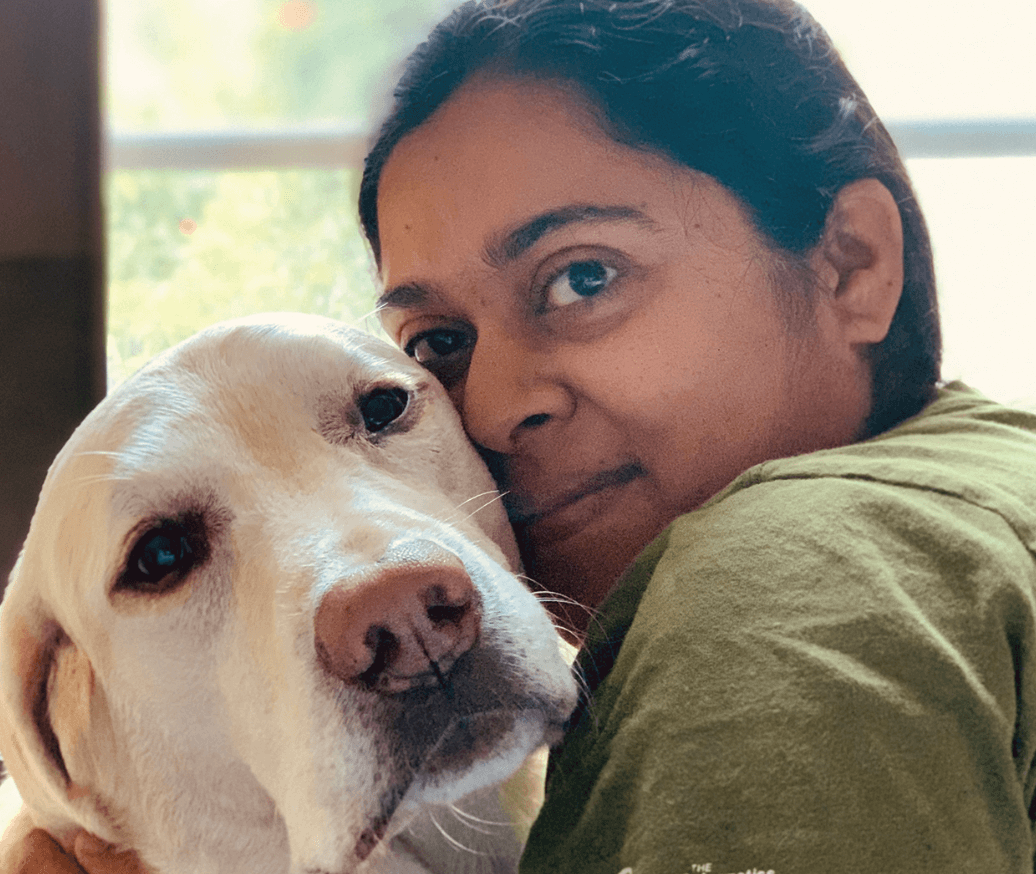
Sam Krishnan, a Hill resident, volunteers at Muttville to facilitate the foster dog matching process. She recently adopted a Labrador named Snowy, also known as “Mr. 10,000,” the 10,000th senior dog adopted from the nonprofit.
“It was always on my agenda to help senior dogs, particularly large dogs. They’re harder to adopt in a place like San Francisco where space can be a limiting factor. Senior dogs are very friendly and make for great companions,” said Krishnan.
Lucho Ramirez, a Connecticut Street resident, adopted Fergus, a 15-year-old Shih Tzu-Lhasa Apso mix from Muttville, his third “rescue adoption.”
“I take him to all the parks, from Potrero Hill Recreation Center Park and Jackson Park to Esprit Park, when it’s open, and Crane Cove Park. He gets me out of the house, exploring more places where I live,” said Ramirez.
Ramirez said having a pet, especially a dog, breaks his routine and helps him see more of San Francisco.
“He’s older, more frail, sometimes disinterested, giving another dog or cat a quick sniff and then moving on. What he lacks in attention he makes up for in cuteness. Plus, it’s wonderful to give him a good life and see him enjoy every day,” said Ramirez.
SFACC, SF SPCA, Muttville, and other animal rescue entities rely on volunteers to help walk dogs, socialize animals, and fundraise to pay for blankets, leashes, and food. Community Medicine Education Training, a four-month mentorship program, is available to high school seniors interested in a career in veterinary services.
Pictured: Sam Krishnan, a volunteer at Muttville, and Snowy, the senior dog she recently adopted. Photo: Jessica Zimmer
 Lori Higa
  Rebekah Moan
  Danny Pham