
Spring can bring fresh feelings of joyful growth. Although allergies can be triggered, the season bursts with flowers and fruits of many shapes and sizes. Some plants have been in San Francisco for a half-millennium or more, flourishing among other florae imported from far-away lands.
The Public Works Street Tree Map, https://bsm.sfdpw.org/urbanforestry/ can be used to find most of San Francisco’s mapped street trees, identifying site-specific ones. A description of how to use the map, as well as information about its continued development, can be found at https://sfpublicworks.org/services/street-tree-map.

The California Native Plant Society offers a plant database, https://calscape.org/, in which a user can type in an address and find florae native to that location. The California Native Plant Society website can be used alongside the Public Works tool to discover locations of specific tree species.
Calscape, combined with the Street Tree Map, revealed native trees in Potrero Hill. Three Coast Live Oak, Quercus agrifolia, are growing at Potrero Recreation Center’s northern edge. There are many more Monterey Pine, Pinus radiata, in San Francisco than Live Oaks. One is located on International Studies Academy’s southeast edge, two across the street from McKinley Square on the third sharp curve going south on Vermont Street from 20th, another on Potrero Recreation Center’s northern edge.

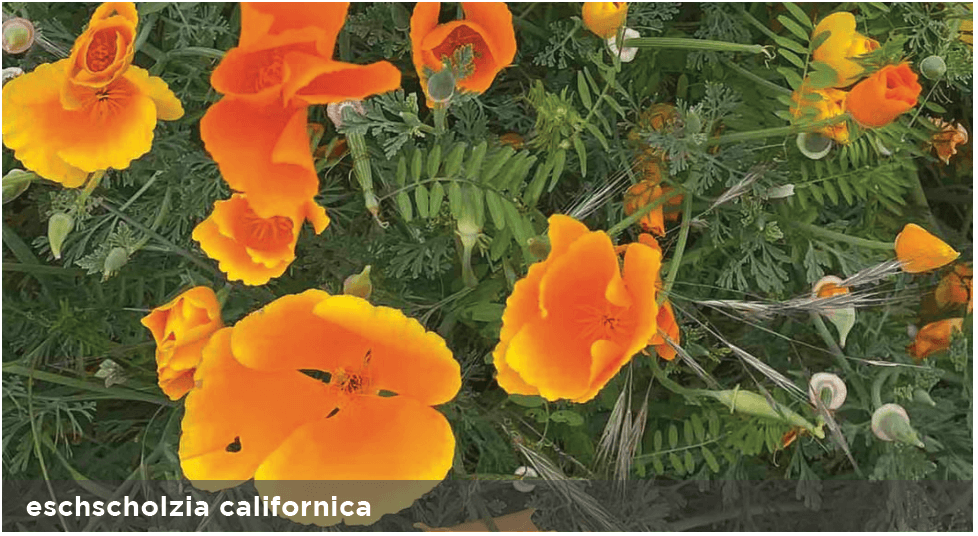
Other organisms co-evolved with native plants and depend on them for food and reproduction. Insects need a specific leaf to munch. Birds recognize and flourish when a certain fruit is available. Native plants tend to adapt well to places ignored by humans; California poppies can often be found in a neglected corner lot amidst long grass.
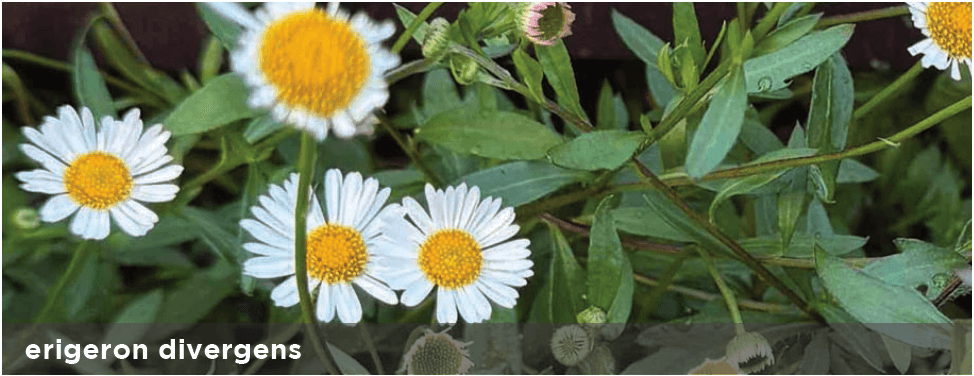
Along the Potrero Recreation Center’s southern boundary a few Ceanothus bushes prolifically bloomed in early spring. According to Calscape, there are many more plants native to Potrero Hill, though they can be hard to spot. These florae tend to “have their moment”, usually in the spring, and then go dormant for the long, dry summer spell of little or no rain.
 Moumita Chakraborty
  Jessica Zimmer
  Mark Steensland