
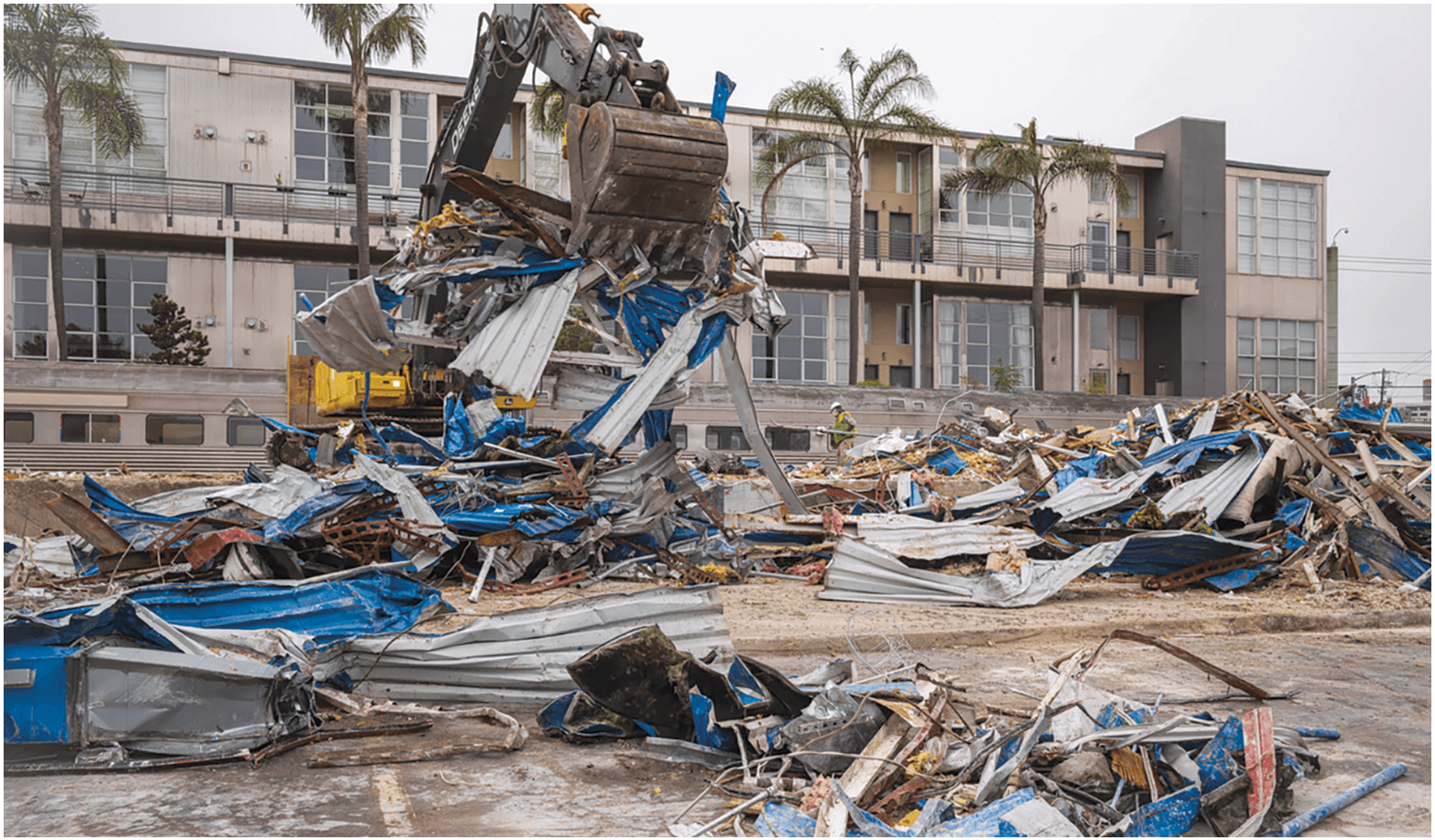
Shovel is hitting dirt at 300 De Haro Street, where an 11-story building consisting of 425 280- to 300-square-foot studios is being constructed. The residences will be “both furnished and unfurnished; furnished units providing queen-sized Murphy beds which convert from a sofa and coffee/dining table, with all units including kitchenettes, an ensuite bathroom, and a work area,” according to DM Development.
Former businesses at 300 De Haro were given 90 days’ notice last January. Since then, the retailers and restaurants formerly inside the space – including Tip Toes Salon, Torraku Ramen, and Cafe da Fonk – have either closed or consolidated at other neighborhoods. Tip Toes had been at the location for 17 years, an early harbinger of a neighborhood shifting from being largely working class to one beset with salons and cafes.
According to Ansen Chen of Torraku Ramen, the De Haro space was the eateries’ first brick and mortar outlet since transitioning from a food truck in 2017.
“Things got quiet after 2022,” Chen said, “We got lucky in that we were able to open a second location on Lombard and shift to delivery service as well.”
The 300 De Haro project is the first mixed-income project in San Francisco to utilize Senate Bill 35, amended by Senate Bill 423, and adopted in 2023. The law, which sunsets in 2036, provides that developments that offer 10 percent of units to households making at or below 50 percent of average median income (AMI) are guaranteed streamlined ministerial – for example, exempt from the California Environmental Quality Act – approval in jurisdictions that have made insufficient progress towards their state-mandated Regional Housing Needs Allocation.
In 2024, San Francisco was identified as being subject to SB 423. As a result, developers don’t have to engage in community processes that the San Francisco Planning Department has labeled “cumbersome,” triggering the need for “trade-offs.”
The project is intended to serve “a diverse community of middle-income earners who have been priced out of San Francisco’s traditional rental market…available to individuals and families earning between 30 percent and 70 percent of the area median income, approximately $41,000 to $95,000 per year,” according to DM Development.
When it was first proposed six years ago the response from Potrero Hill residents was tepid.
“Everyone knows affordable housing is needed, but it’s the way and where that is done which largely goes unnoticed until you suddenly see your favorite businesses close,” said a longtime Hill resident, “Our local go-tos and housing are quickly being swallowed up without much say.”
“DM Developers engaged in conversations in 2019, with some dialogue with the SF Planning Department in 2020, but without any direct contact since,” said J.R. Eppler, Potrero Boosters president.
The average age of residents in Potrero Hill and adjacent areas is 37, with the cost of living roughly six percent and rents about nine percent higher than citywide averages. Rents in the neighborhood have increased by more than 20 percent over the last year, with studio rent prices jumping by roughly 50 percent.
Several developments in the neighborhood have long been filled, with a few listed as having more than 6,000 applicants for up to 150 units. In some cases, residences designated as affordable have different features than market-rate units, related to appliances, flooring, or other amenities.
“Potrero is more of a destination now, with added density and retail corridors on 17th, 18th, and 20th Streets,” said Eppler. “We’re happy to see new neighbors and visitors, but also that we have been able to keep our neighborhoods true to the community spirit.”
“We don’t know how much longer we can afford to live and work here given the commute and expenses,” said Alice and Kai, teachers who went through the housing lottery system. “We love the neighborhood, but we’re also concerned about how it’s changing.”
Some buildings in Potrero Hill have introduced Airbnb options or corporate residential units, with resident-renters and guests noting the appealing transitional environment for working in San Francisco, and the attractions of being in the community.
In addition to housing, the .62-acre lot will feature 6,000 square feet of retail space and 7,000 square feet of outdoor green area. Several nearby residential buildings have struggled to find commercial tenants. DM Development notified former commercial tenants that they can return when construction is finished, expected by the summer of 2027, a lifetime for a small business.
Those interested in renting a unit at the property can register online, but not yet on the city’s affordable housing lottery system, which is called DAHLIA.
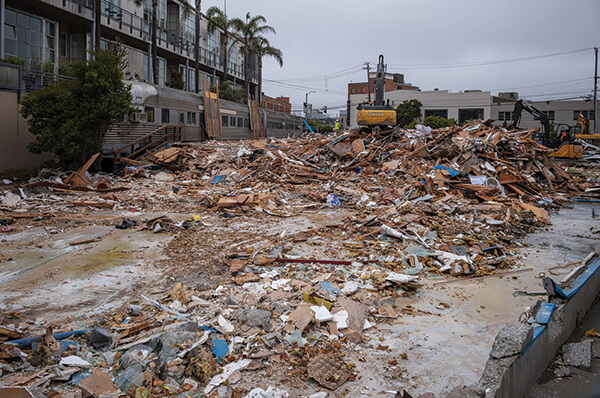
Top: Construction of an eleven-story 425 unit development at 16th and De Haro streets is underway, despite neighborhood concerns. Over the years the triangular lot at the site housed Rustico, The Center for the Book, El Sur, Gitan, Sally’s, Bunn Mike, My Good Pie, and Roadster, among others. Photo: Ed Rudolph
 Steven J. Moss
  Tamala Motta
  S Anne Steinberg