
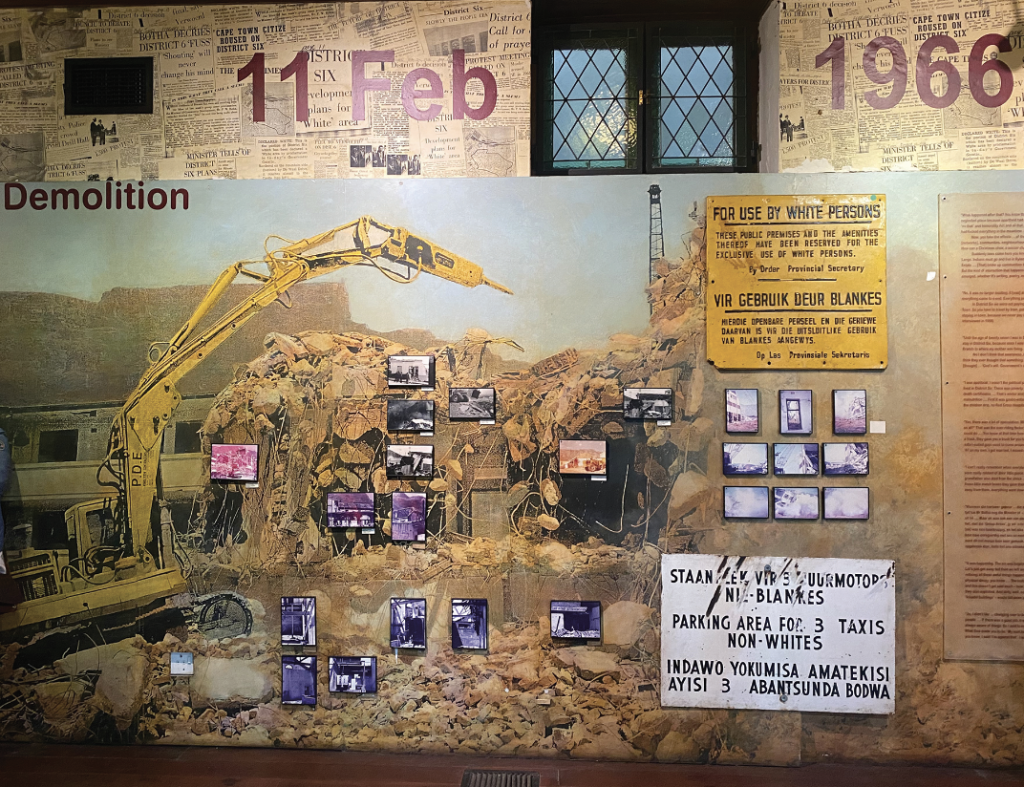
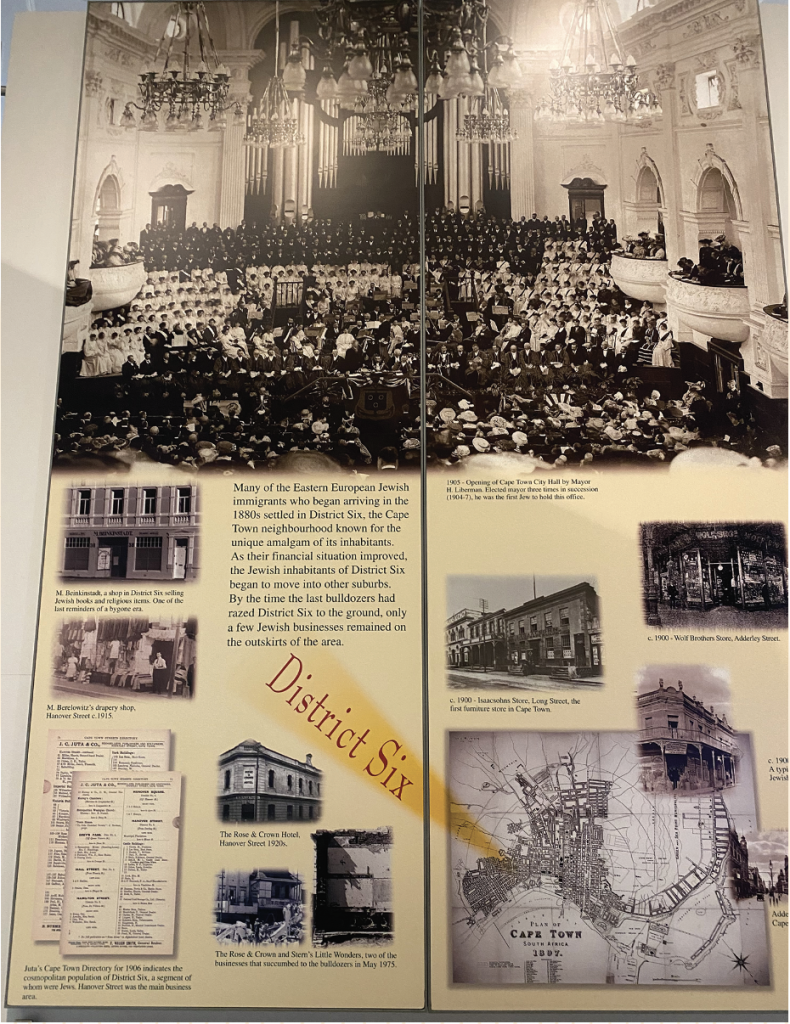
The federal 1949 Housing Act authorized demolition and reconstruction of urban neighborhoods that were considered slums. Under the legislation, “redevelopment” targeted low income and non-white neighborhoods. In the 1960s, with its old Victorian houses and mostly Black population, the Fillmore became the focus of San Francisco’s urban renewal. Jazz clubs were shuttered. Businesses torn down. Two-lane Geary Street turned into a giant expressway, Geary Boulevard, slicing into the community’s heart. Residents were forced from their homes, often without much warning or adequate compensation. In the 1963 documentary, Take This Hammer, James Baldwin stated that redevelopment was “removal of Negroes.” Fillmore was ground zero for one of the West Coast’s largest urban renewal projects, impacting nearly 20,000 people. By the time new housing and storefronts were completed in the 1980s, most former Fillmore residents couldn’t afford to move back…Redevelopment in the Fillmore and other American communities was part of a worldwide movement with racist underpinnings. While San Francisco was moving Blacks from their homes, so too was the City of Capetown, South Africa, forcing Blacks from “District 6” to Langa, a segregated township. These actions continue to reverberate to the present, with many families and their heirs dislocated from San Francisco and District 6 struggling to recreate a thriving home for themselves. The Fillmore itself has never fully recovered from efforts to “improve” it. PHOTOS: Steven Moss
 Thomas Hunter II
  Jessica Zimmer