
Sirens and castaways, drag and modern dance, a shipwreck in a nightclub. We Build Houses Here, performed last May at Oasis, showcased each of these elements intermingling like tidal forces.
“This hits so hard for me,” said Eric Garcia, who directed the immersive theatrical experience. “There is this thing that most (queer) artists go through when you first start, the work comes from oppression, and you speak from a place of minority status. We’ve done our fair share of that, and we have been making a really clear shift with our work to center it on queer imagination, joy, and expansiveness, to show what else is possible with our story. So, this project feels like a beautiful example of that, with shipwrecks disguised as a drag show. It’s glittery and sexy with pop songs, but the show is literally about a shipwreck,”
The play colorfully depicts different experiences of queer community oppression, with the central theme of struggle conveyed through vibrant characters and scenes.
“As a performer, it feels like personal purgatory in some ways too, in the midst of feeling wrecked and being held by this community, and also calling upon this majestic self through drag,” commented Kat Cole, who acted in the show.
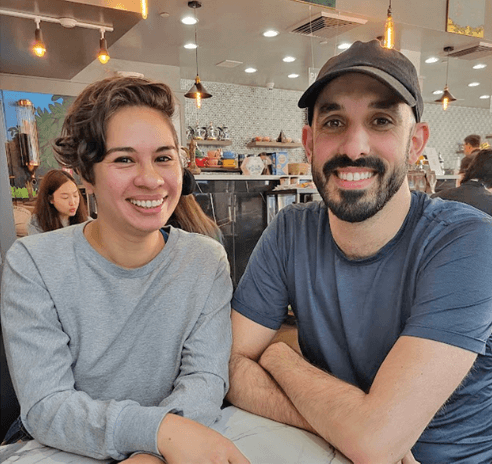
Garcia and Cole came up with the play’s initial concept three years ago as they were fundraising for Detour, their dance-theatre company that creates work for and relevant to the stories of queer, transgender, Black, indigenous people of color (QTBIPOC). They founded the troupe in 2009 after meeting the previous year as fellow University of San Francisco (USF) students. Garcia, a sociology major, was taking dance as an elective. Cole was majoring in poetry, minoring in dance. When Garcia wanted to make a piece for the student cabaret, Amie Dowling, USF’s dance program director, suggested he meet Cole. Garcia brought a composition book filled with images from his dreams to the assignation, sparking their collaboration.
In Detour’s almost 15-year tenure Garcia and Cole have synthesized drag, contemporary art, social justice commentary, and immersive theater, taking inspiration from their personal experiences.
“That’s the growth too, the company grew as we grew as people,” said Cole. “At first, we were very much influenced by what contemporary dance was, like we were making duets where we were sipping tea. As we slowly figured out who we are as people, we started asking larger questions. We went from focusing on what our relationship was in this duet form to how we can speak to the larger community we want to be a part of. The perspective shifted and grew as our awareness as people grew.”
Over the years, Detour’s work evolved in terms of content, artistry, and size. In 2010 they directed or acted in Drift, a film about the journey of two hitchhikers. Up On High, their latest flick, focused on queer expansiveness, featuring more than 60 QTBIPOC artists. As they grew as people and as a company, Garcia and Cole sought to support other artists, spearheading the Tiny Dance Film Festival between 2012 and 2021 to showcase local and international dance films.
One of the biggest pivots they made was transitioning into immersive theatre, an artform that encourages audiences to actively participate in the show, oftentimes with spectators directly interacting with actors. Immersive theatre is increasingly popular around the country. San Francisco has its own unique scene with venues that host regular collaborative experiences. Speakeasy, in North Beach, takes the audience back in time to the 1920s in a three-hour event where participants can engage with characters as if they’re part of the show. Another venue, 13th Floor, employs elements of dance and acrobatics to create immersive stories. Antenna Theatre plays with sound and sculpture to engender a collaboration with audience members.
In 2017, Detour had its big foray into site-specific work with Fugue. Audience members were led through the Mission District as part of an hour-long immersive walking tour en route to an imaginary, utopian city that embodied a pre-gentrification San Francisco; unique, artistic, happy, and affordable. A few years later, Garcia and Cole began ideating a new immersive piece, We Build Houses Here, with a directive to lean into queer joy and further explore immersive theatre.
Brian Thorstenson wrote We Build Houses Here, in which multiple stories follow the theme of rebuilding after wreckage. According to Garcia, the tale reflects the queer communities’ struggle to overcome societal adversities while moving towards a brighter future through the vibrant lens of drag and dance. “Queer Maximalism” showcases actors cognizant of their journeys as queer people, who can express their sentiments through drag melded with traditional modern dance. Sirens serve as godlike figures as they observe each of the seven castaways travel through intricate voyages of struggle and survival. The makeup, costumes, and mix of drag and dance provide a sense of grandiosity.
The performance space was an important component of the production. Oasis is a sanctuary for San Francisco’s LGBTQ community and drag artists. Garcia and Cole wanted to support the venue by providing work there and drawing audiences to it. There was also a deliberate focus on immersive theatre, creating a safe space for the audience to connect with the show’s underlying themes by engaging with each character’s story in a deeper way than typically available in a traditional stage performance.
We Build Houses Here sold out almost every night it played before it closed at the end of May. It may be reprised next year, and there’s talk of touring. Meanwhile, Garcia and Cole are involved with other Bay Area projects and groups. They’ve collaborated with the 13th Floor Dance Theatre, The Anata Project, and number 9 dance, among others.
Garcia’s primary interests have been in dance and drag, regularly appearing as Churro Nomi in Clutch The Pearls and Drag Spectacular Spectacular. He’s also the managing director of queer and transgender-based productions and dance companies, as well as a founding member of the Latinx/Hispanic Dancers United.
Cole’s passion for film has led her to act in, direct, and produce movies that have been showcased in festivals around the country. Recently, she served as an associate producer for I’m a Virgo, an Oakland-based Amazon series that premiered last spring. She also co-founded and produced the Black X Film Festival.
According to Garcia, the co-founders want to “keep going down a pathway of creating experiences rooted with expansive queerness, activism, storytelling, and entertainment, where the second someone walks in, to the minute they leave, they feel like they are part of something, while also continuing to explore and depict gender-bending artforms. I feel perpetually new, even though I’ve been doing this for 15 years, and I’m excited to see if there are people in the Bay Area, that are interested to join forces with us to lift up queer artists, and to see how weird we can keep San Francisco.”
 Mark Steensland
  Jessica Zimmer
  Thomas Hunter II